Search
  • Do you know what can power regulators be used for ?
    Do you know what can power regulators be used for ? Nov 01 , 2023
    What can power regulators be used for? we are going to cover this topic today. Power regulators can be widely used in the following areas: 1. Electric furnace industry: annealing furnace, drying furnace, quenching furnace, sintering furnace, crucible furnace, tunnel furnace, melting furnace 2. Machinery and equipment: packaging machinery, injection molding machinery, heat shrink machinery, kneading machinery, food machinery, tempering equipment, plastic processing, infrared heating 3. Glass industry: glass fiber, glass molding, glass melting, glass printing, float glass production line, annealing tank 4. Automobile industry: spray drying, thermoforming 5. Energy-saving lighting: tunnel lighting, street lighting, photography lighting, stage lighting 6. Chemical industry: distillation and evaporation, preheating system, pipeline heating, petrochemical industry, temperature compensation.
  • How to choose proper SCR power regulator according to your application ?
    How to choose proper SCR power regulator according to your application ? Jul 02 , 2025
    How to choose proper SCR power regulator according to your application ? SCR power regulator is heavily used in industrial application particularly heating application, to choose proper SCR, several key factors needs to be take into consideration.  1)first thing first, figure out your source whether it is single phase or three phase, the single phase SCR is for single phase source, 3 phase SCR is for 3 phase source, like 3 phase 4 wires, 3 phase 3 wires etc. if the load is single phase, the process is quite simple, make sure you select a SCR with the current rating 2 times higher of the actual load. for example, if you have a heater with 20 amps and 240Vac load, the proper SCR would be 40 amps and 240~480Vac load2)PIDMaxwell SCR power regulator only works for resistive load, make sure your load is resistive load like a heater, electric heater, infrared heater etc3)Identify your source, the source would be 3 phase 380V 4 wires source, like in China, or 3 phase 4 wire 400V in german...
  • what is ON/OFF control mode in the context of PID temperature controller
    what is ON/OFF control mode in the context of PID temperature controller Dec 24 , 2025
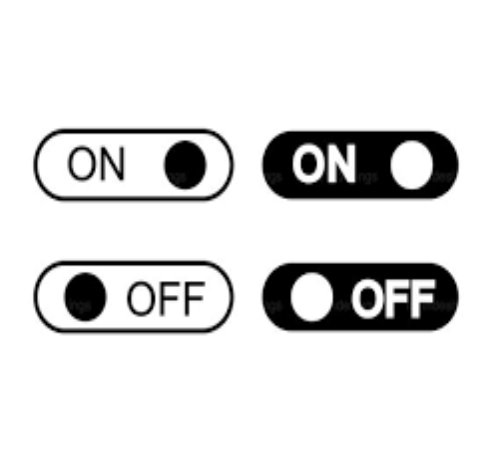
    ON/OFF control mode is simplest form of automatic control mode, it's like a switch, either ON or either off. the rules is very simple, in a reverse control situation, when prorcess value is lower then the desirved, the output is fully on, when process value higher than the setting value, fully off. an analogy we often use is like driving the car from starting point to finishing line.In the situation of an ON/OFF control, you apply the full thrust and drive the car to the finishing line, and after the car cross the finishing line, you release the thrust and turn the engine off. the rule is very simple, the downside of this type of control mode is there will be significant overrun at the finishing line, it's impossible to stop on the finishing without overrun, in contrast, the PID control mode, the driver will observe carefully and calculate the distance and speed in relation to the finishing line, and gradually apply less thrust and maybe apply a little brake too to make sure the car st...
  • Why can't we just look at the kilowatt rating when selecting a three-phase power regulator?
    Why can't we just look at the kilowatt rating when selecting a three-phase power regulator? Jun 18 , 2026
    When selecting a three-phase power regulator, many customers focus first on total power—asking, "What size do I need?" based on the equipment's actual load wattage. While this approach isn't wrong, power rating alone isn't enough; we also need to consider voltage, current per phase, load type, the temperature controller's output signal, and the electrical cabinet's heat dissipation conditions. First, distinguish between single-phase and three-phase systems. Use a single-phase power regulator for 220V single-phase heating elements, but for 380V three-phase heating equipment—such as ovens, electric furnaces, heat treatment furnaces, or drying equipment—we must use a three-phase power regulator. Even if the total power is low, if the load is wired in a three-phase configuration, we cannot simply choose a single-phase unit for convenience; you must calculate the current based on three-phase requirements. The key factor is the current per phase. For instance, with a 380V, ...
  • How can the problem of circuit breakers tripping during the startup of electric furnaces or ovens using silicon carbide or molybdenum disilicide heating elements be resolved?
    How can the problem of circuit breakers tripping during the startup of electric furnaces or ovens using silicon carbide or molybdenum disilicide heating elements be resolved? Jun 18 , 2026
    In the daily operation of industrial heating equipment, almost every field engineer has encountered this scenario: the moment the start button is pressed, the circuit breaker in the power distribution cabinet trips immediately—the equipment "goes on strike" before it even begins to work. This happens frequently, especially when the equipment is starting from a cold state: the ammeter needle swings violently to the maximum, a dull "hum" might be heard from the contactor, and then everything goes dead. Faced with this predicament, many people’s first reaction is to suspect the circuit breaker is undersized, complain about unstable grid voltage, or blame the power regulator itself. However, seasoned veterans will tell you that the real culprit behind these frequent trips often lies in the massive inrush current that occurs the moment startup begins. To understand this phenomenon, one must look at the physical properties of electric heating elements. Whether it is common resist...
  • What are the applications of SCR power regulators ?
    What are the applications of SCR power regulators ? Jun 23 , 2026
    What are the applications of power regulators? Today, Xiamen Maxwell Automation Limited.—a manufacturer of SCR Power Regulator—discusses the wide range of applications and industries where power regulators are used: Power regulators are widely used in the following areas: 1. Electric furnace industry: Annealing furnaces, drying ovens, quenching furnaces, sintering furnaces, crucible furnaces, tunnel kilns, and melting furnaces. 2. Machinery and equipment: Packaging machinery, injection molding machines, heat-shrinking equipment, extrusion machinery, food processing machinery, tempering equipment, plastic processing, and infrared heating. 3. Glass industry: Fiberglass production, glass forming, glass melting, glass printing, float glass production lines, and annealing lehrs. 4. Automotive industry: Paint drying and thermoforming. 5. Energy-efficient lighting: Tunnel lighting, street lighting, photography lighting, and stage lighting. 6. Chemical industry: Distillation and ev...
  • An indepth discussion  on SCR Control for Molybdenum Disilicide (MoSi2) Heating Elements
    An indepth discussion on SCR Control for Molybdenum Disilicide (MoSi2) Heating Elements Jun 23 , 2026
    SCR Control for Molybdenum Disilicide (MoSi2) Heating Elements Molybdenum disilicide (MoSi2) heating elements, such as Kanthal Super, are widely used in high-temperature industrial furnaces operating up to 1800°C. However, controlling the power delivered to these elements requires specific types of Silicon Controlled Rectifier (SCR) or thyristor power controllers due to the unique electrical characteristics of MoSi2.  The Challenge: MoSi2 Resistance Characteristics The primary challenge in controlling MoSi2 heating elements is their extreme Positive Temperature Coefficient (PTC) of resistance.  Unlike standard resistance wires (like Nichrome) which maintain a relatively constant resistance, MoSi2 has an extremely low resistance when cold—acting almost like a short circuit. As the element heats up, its resistance increases dramatically, often by a factor of 10 to 16 times its cold resistance  If full voltage is applied to a cold MoSi2 element, it will draw a mas...

Leave A Message

Leave A Message
If you are interested in our products and want to know more details,please leave a message here,we will reply you as soon as we can.

Home

Products

contact

whatsapp